Pavey Ark released their latest album More Time, More Speed in November, a record shaped by collaboration, environment, and a deliberately unforced writing process. Rather than starting with a fixed concept, the material developed gradually, allowing songs to evolve naturally.
With the band set to play the Dayrider Festival in Hull on 1 February, we asked David Echevarria to speak with lead vocalist and songwriter Neil Thomas about how the album came together, the balance between instinct and intention in their writing, and why preserving the original feel of a song mattered more than refining it for the stage.
YCG: So, talk me through what Pavey Ark is. What’s your vibe?
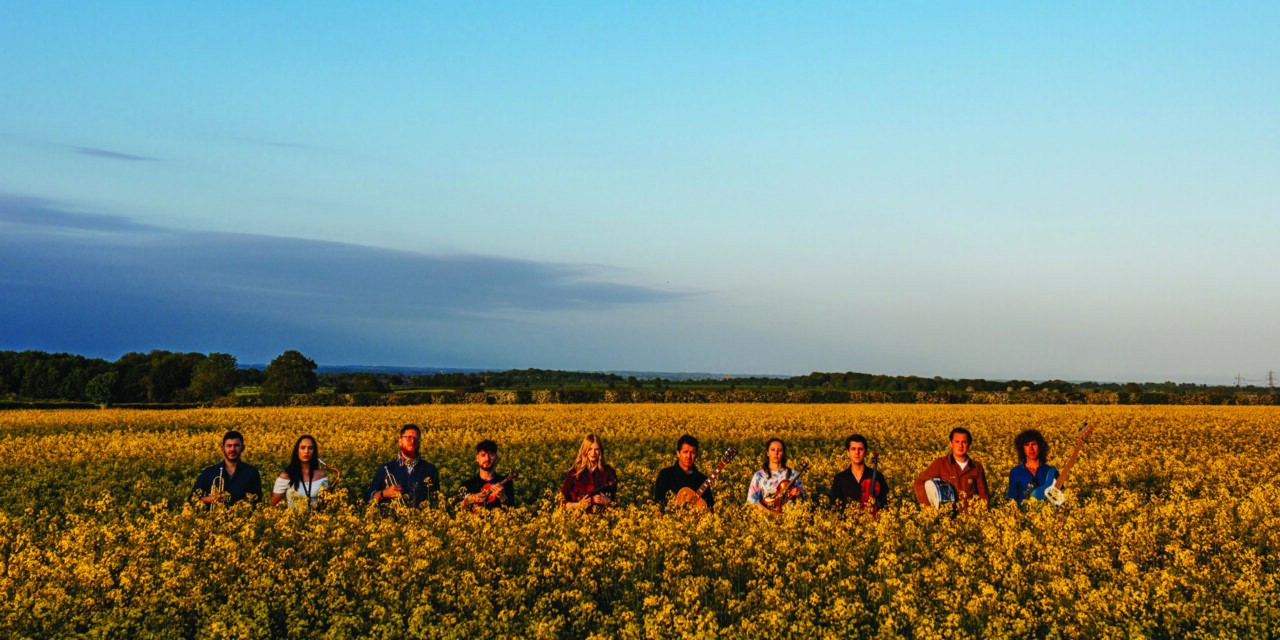
Thomas: We picture ourselves as cinematic indie folk. We’ve got an indie folk sound, but we play with a lot of strings and horns now. Often in a folk band the strings have a folk sound, like a fiddle, whereas ours are more orchestral.
The lineup’s evolved over a few years. It started off with myself, bass, guitar and drums. Then we did a BBC Introducing session and got a couple of violin players in for that. Since then, strings have been part of it the whole time.
So, it’s built up. For bigger gigs, like South by Southwest (SXSW), festivals and big stages, we have a string quartet and brass as well now.
But it’s quite flexible. We can play a festival with a full band, or if it’s a support slot, we can play as a three or four, stripped right back.
YCG: Which do you prefer doing, the big fuller sound or stripping it back?
Thomas: The big one. It’s more challenging, and I think people enjoy watching it more as well. We did our album launch back in Hull with a string quartet. It wasn’t a huge venue, but people don’t often get to see a string quartet there, so I think they enjoyed that.
YCG: The album is definitely cinematic. Did you go in thinking that was the vibe you were going for, or did it evolve as you were writing it?
Thomas: Yeah, we went into it with that in mind. Some of the older songs, when we first started playing with strings, just had two violins. But when we were doing the new album, Chris, who writes most of the strings, wrote the whole thing as a string quartet, aiming for that bigger sound.
We also wanted a couple of songs to be really stripped back. I didn’t want every song to be big. It’s nice to have some stripped-back ones for dynamics.
YCG: Time feels like a central thread running through the album. What drew you to that during the writing process? Was it something you’d been wanting to explore, or did it emerge more naturally as the record took shape?
Thomas: I wrote a song called More Time, More Speed just after the first album, and that was obviously about time. Shortly after that, another one popped up.
Then there was another song called Your Sweet Time, which I wrote during the pandemic. That’s when the idea really cemented, because I had these songs about time. I started to think it might be nice to theme the album that way. From that point, most of the songs were skewed in that direction. It came together organically. It wasn’t directed that way, it’s just how it flowed.
YCG: Do any of the songs start with one idea in mind and end up conveying something entirely different?
Thomas: Yeah. There’s a song called Stop These Games, which isn’t about time at all. It was about Dominic Cummings during the pandemic, when he drove to Barnard Castle. More specifically, it’s about his apology in the Rose Garden and what was going on in his head. You could tell he didn’t mean it. It’s more about power and how it corrupts, rather than the pandemic itself.
YCG: You recorded in a barn outside Hull. Did the setting influence anything, or did you have a set plan for how the album would sound?
Thomas: It wasn’t a barn exactly. It was a working farm with several buildings converted into studios and art spaces. When you were in the recording room, you could hear cows being fed next door, so sometimes we had to pause. There were other people in the studios too, like a sculptor and some painters.
We mainly hired one room for rehearsals and ended up recording most of the album there. It wasn’t very soundproof, so if a tractor or cow moved, the take was scrapped. But it was nice to work at our own pace.
I think the setting influenced the performance a little. It was a beautiful, relaxed environment, and I could take breaks and walk around. That atmosphere affected how I performed, not the songwriting, but how the songs came across.
YCG: When you performed the songs live, like at the album launch with the quartet, was there anything that surprised you compared to the recorded versions?
Thomas: We’ve evolved some of the songs for live shows. For instance, Yesterday’s Done. We extended the string quartet at the beginning, so you get about two minutes of strings before the rest of the band kicks in. We’ll probably keep doing that live because it sounds really nice, but it would have been a bit much on the album. It would’ve taken it to six minutes, and for the flow of the record it wouldn’t have felt right.
YCG: You’ve played big events like SXSW and Glastonbury. Has that affected your writing at all? Are you thinking about how songs will sound on larger stages?
Thomas: I don’t really think about how it’ll sound live when I’m writing. I focus on making the song good and drawing inspiration from other artists I like. If I’m writing something really chilled out, I wouldn’t think about giving it more space for live performance. I just let it come out and work it out afterwards.
Sometimes when you’re writing an album, you notice you’ve got a lot of similar songs. A song comes from a certain place, and it’s important to keep it how you intended. You might also think it’d be good to have something more upbeat, a bit of oomph. If that happens, those songs usually come naturally anyway.
YCG: You’ve listed influences like Jackson C. Frank, Nick Drake and Laura Marling. Did those influences come through more clearly as you made the album, or did you find yourself moving away from them as the record took shape?
Thomas: I aspire to be like the artists who influence me, but I try to avoid copying what other people are doing. With Laura Marling, there’s an album I loved the feeling of, and that inspired the string quartet aspect. But I wouldn’t listen to a song and think about taking parts from it.
The best feeling when you’re writing is when a song comes out of nowhere. Within a few hours or a day, you’ve got something that didn’t exist before. It’s even more exciting when it feels different, rather than sounding like someone else.
YCG: You said Chris handled the string arrangements. What was that collaboration like? Did he bring in ideas that surprised you?
Thomas: When I sent songs to Chris, they were usually pretty fleshed-out demos, with guitar, vocals, sometimes bass or piano. I’d sometimes hum an idea or use a rough MIDI keyboard. Often a melody would pop into my head later, and I’d think it would work well on horns or strings.
If I had an idea, Chris would work it into the score. Other times I’d send a bare-bones song, and he’d come up with something completely new. I honestly can’t remember a time when he’s written something I didn’t like. He’s really talented.
There have been times where I’ve adjusted things. A track might have had strings all the way through, but when recording I’d bring them in later, so it builds differently.
YCG: Were there any songs that really changed once the horns or strings were added?
Thomas: Definitely. Hold Tight originally had a little picking intro and was meant to be a 40-second filler between songs. I added a few words and passed it to Chris, and he layered loads of string parts until it kept building. It ended up being a full song.
The first song on the album, Out of Here, was going to be shorter as well. After the big drum fills, it drops away into string quartet and humming for the second half. Chris wrote these really nice parts, so I extended it. It turned into something I didn’t expect when I first wrote it.
YCG: Do you have any big plans coming up?
Thomas: We’ve got a gig at Café No. 9 in Sheffield on the 30th of January, which is quite a small venue, so it should be a fun squeeze. That weekend we’re playing the Dayrider Festival in Hull. Hopefully we’ll have a London gig rescheduled for March.
From March onwards, the focus is live shows. It’d be nice to get lots of quality gigs next year. They don’t have to be big, just shows where people are really into it and care. The plan is to keep finding the right gigs. More Time, More Speed moves with a delicate tension between intimacy and orchestral sweep. Strings and horns give the indie folk core a cinematic breadth, while the songwriting balances reflective storytelling with subtle bursts of energy. The result is an album that feels carefully considered but never forced, where each track grows organically from idea to full arrangement.
The album is available on streaming platforms, physically, and you can catch them in Hull at The People’s Republic on the 1st of February, with more details on their website.